Private-label programs
OEM production or ODM development, agreed per project
OEM builds your brand on an existing Lemon platform. ODM develops a product around your market brief. Both follow the same disciplined path: brief, feasibility, samples, then agreed production.
Which path fits
OEM and ODM, side by side
The difference is the starting point. If a suitable platform already exists, OEM is usually the faster route. If no existing product matches your market, ODM development closes the gap.
| Aspect | OEM — on an existing platform | ODM — product development |
|---|---|---|
| Starting point | An existing Lemon platform with proven hardware and tooling. | A new product definition built around your market brief. |
| Your role | Define brand, finish, packaging, and target specification. | Define the problem, market, and performance goals; we co-develop the solution. |
| Our role | Build to your brand on a validated platform. | Develop the product: selection, layout, styling, and documentation support. |
| Typical timeline | Shorter — the platform is already qualified and in production. | Longer — development, samples, and agreement come before production. |
| Best suited for | Brands and distributors private-labelling a known format quickly. | Partners entering a new segment or needing a differentiated product. |
A shared foundation
Define the details of your product
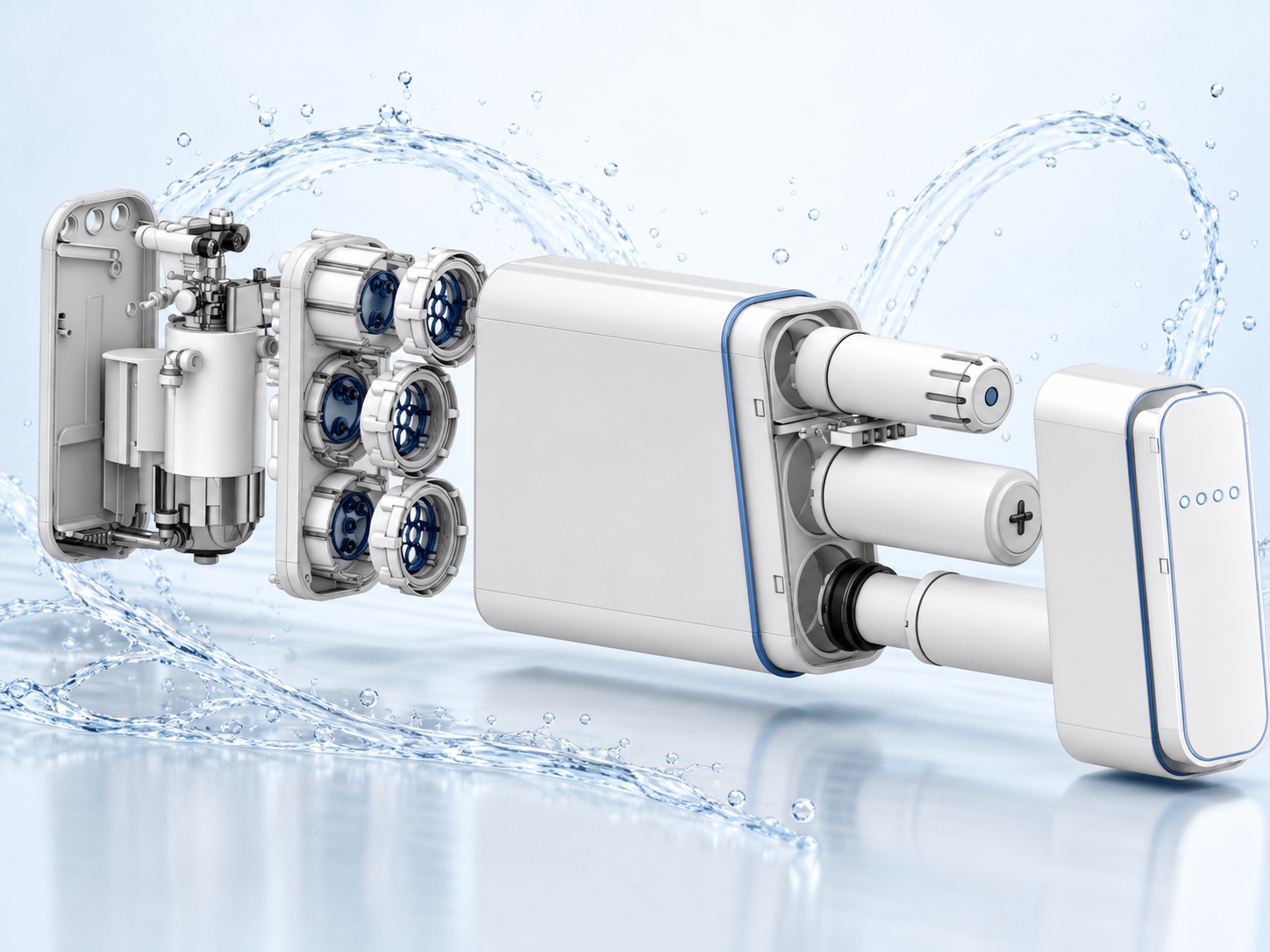
Many Lemon programs start from an established bill of materials like the one pictured. From there, configuration, exterior, logo, packaging, and documentation changes are listed, priced, and agreed individually — what is feasible depends on the platform and volume you choose.
- Configuration: Filtration stages, membrane type, capacity, fittings, and electrical options are selected against your water conditions and target format.
- Exterior: Housing colour, panel finish, and cosmetic details can be agreed per project within existing or new tooling constraints.
- Logo & branding: Logo application on the unit and interface elements is prepared from your artwork files and approved before production.
- Packaging: Retail or neutral cartons, inserts, and labelling artwork are coordinated with your team and confirmed on samples.
- Documentation: Manuals, labels, and packing lists can be adapted to your language and market needs as agreed in the project scope.
How a project runs
Four stages, from brief to agreed production
Every OEM and ODM engagement follows the same sequence. Samples are evaluated before production, and quantities or timelines are confirmed against the agreed design — never guessed up front.
- 01
Brief
You share the market, water conditions, desired capacity or format, order volume, branding, and launch needs. A complete brief makes every later estimate more accurate.
- 02
Feasibility & configuration
We review what is feasible on existing platforms or what ODM development would require, then propose a configuration, customization scope, and commercial terms for agreement.
- 03
Samples & checks
Samples are produced for your evaluation — appearance, fit of branding and packaging, documentation, and function. Findings are resolved before production is confirmed.
- 04
Agreed production & inspection
Production runs to the agreed configuration, sample standard, quantity, and inspection plan. MOQ and lead time depend on the agreed design and volume.
Prepare your brief
What to include in a procurement brief
The more context you share at the start, the sooner we can tell you what is feasible. A useful brief covers:
Your market
Country or region, sales channel, and target customer.
Water conditions
Feed water quality data or description where available.
Desired capacity / format
Throughput, form factor, and installation setting.
Order volume
Initial order and expected annual range.
Branding
Logo, colour, packaging, and documentation needs.
Launch needs
Target market requirements and any certification checks for the product and destination.
Common questions
Before you inquire
What is the minimum order quantity (MOQ)?
MOQ depends on the agreed design and volume. Standard configurations on existing platforms generally allow lower quantities than projects needing new tooling or custom packaging. We confirm the MOQ with you during the feasibility stage.
How long does an OEM or ODM project take?
Lead time follows from the agreed design, customization scope, and order volume. Simpler branding projects on existing platforms move faster than full ODM development with new parts and packaging.
Which certifications apply to our product?
Certifications must be reviewed for the specific product and destination market — we do not make blanket claims. Tell us the target market early so requirements can be checked against the proposed configuration.
Can we change housing colour, logo, and carton artwork together?
Yes, exterior styling, logo application, packaging, and documentation can all be part of one agreed project scope. Each element is confirmed on samples before production.
When are samples evaluated?
Samples are built and evaluated before production approval. Your sign-off on the sample and the agreed checklist is what releases the production run.
Certification requirements vary by product and destination market. We review them together with you during feasibility — please ask about the specific model and country rather than relying on general claims.
Next step
Send your brief for OEM or ODM
Tell us about your market, water conditions, format, volume, and branding. We will come back with a feasibility view and the next concrete step.
Prefer to browse first? See all products or view real installation examples.